Asbestos and fibro sheeting in older Newcastle homes
Most of the sheet lining people call asbestos in Newcastle is fibro, and most of what people call plasterboard is not fibro at all. The two are different products from different eras, and telling them apart is the first thing a homeowner in an older house needs. This page is a guide rather than a service, because asbestos work of every kind sits outside what we do. What we do is stop when we find sheeting we cannot vouch for, and sheet the room once somebody licensed has taken it away.
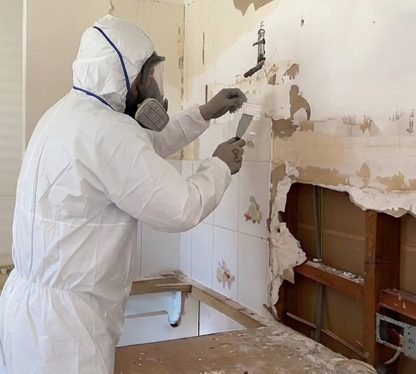
Relining after a licensed removal
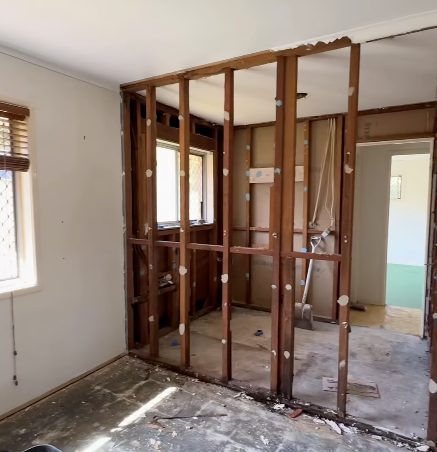
We sheet and set the room once the asbestos has been properly removed and the space is clear. That is the whole of our involvement, and it is ordinary plastering from that point. We match the board to the frame we find and set it to the level you want. Old Newcastle framing is rarely at a spacing anybody planned, so it gets measured before anything is ordered.
- We start after the removal, not before it
- Board measured on site before anything is ordered
- Set and sanded, with no primer coat from us
Wet areas, eaves and garages, where fibro turns up most
Fibro was used where plasterboard could not go, so the places it is found are the places plasterboard still cannot go back. A bathroom or laundry takes Gyprock Aquachek or James Hardie Villaboard rather than standard board. Plasterboard is not permitted in an eave, so that lining comes back in fibre cement rather than board. Eaves and soffits are not work we take on, so that part of a house goes to another contractor.
- Aquachek or Villaboard where the room is wet
- Fibre cement back into an eave, never plasterboard
- Eaves and soffits go to another contractor
What decides an asbestos question
Almost every asbestos question in a Newcastle house comes down to three things. What the sheet is, how much of it there is, and who is allowed to touch it. These are the six that settle it, and the first is the one search results get wrong. A test on one wall settles that wall and nothing else.
Fibro and plasterboard are two different products
Plasterboard did not reach Australia until 1947 and was not common until the 1960s. Fibro is the older of the two and a different thing entirely: asbestos cement sheeting, used here from the 1940s to the late 1980s. Most of what people mean when they say asbestos in a house is fibro rather than the plasterboard beside it. The search results blur the two. A lot of what comes up is British rather than Australian, which is why the descriptions never match what is on your wall. Neither the age nor the look of a sheet settles what is in it, so the only honest answer is a test.
Age is the first screen and the dates are specific
SafeWork NSW puts a home built or renovated before 1987 in the highly likely bracket, and 1987 to 1990 in the likely one. In New South Wales, fibro stopped containing asbestos by the mid 1980s, and asbestos was banned outright on 31 December 2003. Mayfield, Islington, Tighes Hill, Carrington, Wickham, Waratah, Georgetown, Lambton, Wallsend and Stockton are dominated by housing built well inside that window. So is most of what gets bought here to renovate. Age does not tell you what a sheet is. It tells you whether the question is worth asking, and in this city it usually is.
Not even a plasterer can tell you what a sheet is
Not a plasterer, not a builder and not a website. Confirmation is a sample taken properly and analysed in a laboratory. Everything short of that is a reason to stop rather than a finding. What a photograph tells us is where to be careful. Cover strips over the joints of a sheet wall. A sheet behind bathroom tiles. Eaves and soffit lining. Sheeting in a garage or under a verandah. The backing under vinyl sheet flooring, which catches people out in a kitchen or a laundry. None of those is identification, and we will not present them as identification.
Friable, non friable and 10m² decide who can legally touch it
Friable asbestos crumbles to powder under hand pressure when it is dry. Only a Class A licence holder can remove it, in any quantity, with no exception. Non friable asbestos is fibre bonded into a compound, and asbestos cement sheeting is the common example. More than 10m² of it needs a Class B licence. A Class A holder can do Class B work as well. 10m² or less of non friable can legally be removed without a licence, and SafeWork NSW recommends using a licensed professional anyway. Anyone removing it unlicensed still needs asbestos awareness training and safe procedures.
The tools that must never come near it
SafeWork NSW is explicit about this. Never use high pressure water spray, compressed air or similar tools on asbestos. Never pressure clean an asbestos roof, because the sheeting is brittle. Power tools, angle grinders, sanders, circular saws and dry sweeping are all the wrong answer around a sheet nobody has tested. Most domestic exposure happens during a renovation somebody is doing themselves, with a power tool, on a Saturday. There is no safe level of exposure to asbestos fibres, and the diseases they cause have no cure.
In Newcastle it does not go in a skip
City of Newcastle's own asbestos disposal fact sheet is current at July 2025. Asbestos delivered in skip bins or on tilt trays is not accepted at Summerhill. Loads have to be booked on 02 4974 2000 before 3.30pm on the last weekday beforehand. Delivery is between 7.30am and 12 midday on the booked day. Bonded asbestos is double wrapped in heavy duty plastic, sealed with tape and labelled asbestos waste. Bundles run no longer than 2m and no higher than 0.5m. Anything over 100kg or 10m², whichever comes first, has to be registered in the NSW waste tracking system. A kerbside bin and the household waste stream are both out, whatever the quantity.
What we do and what we will not touch
We stop, and we tell you what we found
Sheet lining in a pre 1990 house is a reason to put the tools down rather than a conclusion about what it is. We leave it undisturbed, we tell you what we have found and where, and the job pauses there. Nothing gets cut, drilled or sanded on a guess.
We do none of the asbestos work
No removal, no sampling, no disturbance and no opinion about what a sheet is made of. Those are licensed and trained roles with their own rules, and a plasterer holding none of them is not the person to ask. The right next call is a licensed asbestos assessor, who can take a sample and have it analysed.
We sheet the room once it is gone
The relining is ordinary plastering and it is the part we are for. We sheet, set and make the cornice line good, and the room goes back into use. Older Newcastle framing is usually hardwood, which changes the screw before it changes anything else.
Frequently asked questions
Does Gyprock contain asbestos?
No. Gyprock is a brand of paper faced plasterboard, and the product on sale today contains no asbestos. The Australian ban took effect on 31 December 2003 and covers import, manufacture, use and sale. What people usually mean by asbestos in a house is fibro, which is asbestos cement sheeting and a different product entirely. Newcastle Gyprocker Heroes install plasterboard and we take on no asbestos work at all.
What is the difference between fibro and plasterboard?
Fibro is asbestos cement sheeting, a hard grey board used in Australian houses from the 1940s to the late 1980s. Plasterboard is gypsum between two sheets of paper, and it is the newer product. It arrived here in 1947 and did not become usual until the 1960s. They look different, they cut differently and they go up differently. Neither the look nor the age of a sheet proves what is in it, so a test is the only answer that counts.
Do you remove asbestos?
No. Newcastle Gyprocker Heroes take on no asbestos work at all, and that includes sampling and removal of any quantity. Friable asbestos is Class A licensed work in New South Wales, and non friable over 10m² is Class B. Once it has gone and the space is clear we come back, and the room gets sheeted like any other.
How do I know if the sheeting in my house is asbestos?
You have it tested, and there is no shortcut. A sample has to be taken properly and analysed in a laboratory, and nothing visual settles it. Age changes the odds rather than the answer. In a house from before 1990 the odds are high enough to be worth a test. A licensed asbestos assessor is who takes the sample, and Newcastle Gyprocker Heroes do not.
Who is allowed to remove asbestos in New South Wales?
The type and the quantity decide it, and the rule is precise. Friable asbestos is Class A only, whatever the quantity. Above 10m², non friable is Class B, and a Class A holder covers that too. At or under 10m², non friable needs no licence at all, and SafeWork NSW still points people to a professional rather than to themselves.
Can you sheet the room after the asbestos has been taken out?
Yes, and the relining is the only part of an asbestos job we are involved in. Once the removal is done and the space is clear, the work is ordinary plastering. Board matched to the frame, joints set, cornice made good, and the room handed back. In an older house the frame is the variable, because the spacing behind fibro is rarely what a modern plan would use. It is the same work as relining a room in any other renovation.
Can asbestos go in a skip bin?
No. City of Newcastle's asbestos disposal fact sheet, current at July 2025, rules skip bins and tilt trays out at Summerhill. Nothing asbestos goes into a kerbside bin or the household waste stream either. Loads have to be booked ahead, wrapped and labelled, and the larger ones have to be registered before they move.
Once the asbestos has been removed by somebody licensed and the space is clear, the walls and ceilings still have to go back. That is renovation plastering, and it is where we come in.